AdVocate harshit Sachar | chamber no: 617 | district courts ludhiana | 2817 gurdev nagar ludhiana | ✆+91 7889228369

When an Electric Pole or Transformer Blocks Your Plot — What Can You Do?
If an electricity pole or transformer sits in front of your plot and the department refuses to relocate it, this guide explains practical steps — representations, consumer/ombudsman complaints, and court remedies under civil and constitutional law.
ELECTRICITY BOARD CASES
Advocate Harshit Sachar
11/6/20256 min read
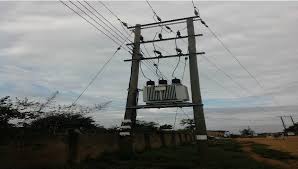
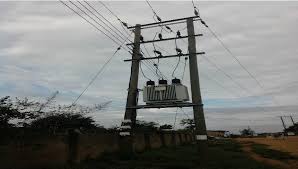
If an electricity pole or transformer sits in front of your plot and the department refuses to relocate it, this guide explains practical steps — representations, consumer/ombudsman complaints, and court remedies under civil and constitutional law.
When an Electric Pole or Transformer Blocks Your Plot — What Can You Do?
(Practical guide for homeowners and residents — with legal routes explained)
1. The common facts and the problem
Many homeowners find an electric pole, EB post or transformer installed immediately in front of their plot or house. Often the electricity department refuses relocation, or asks the resident to obtain an NOC from a neighbour or the proposed relocation site — or asserts “feasibility” or technical constraints. That leaves law-abiding buyers stuck despite having paid for their property and built homes.
There are practical and legal remedies available — short steps you should take first, followed by escalation routes if the department remains uncooperative.
2. First practical steps (do these immediately)
Written representation to the electricity department — deliver by registered post and retain acknowledgement. Say when and where the pole/transformer was installed and how it obstructs access/use.
Collect local evidence — photos showing proximity to your gate/door, any danger (low wires), distances to other poles, and evidence of other houses in the colony having connections.
Record communications — keep copies of emails, WhatsApp replies, receipts, and service request numbers.
Check your sale deed / sanctioned layout — any approved layout plan, site plan or sanctioned map strengthens your case.
Neighbours’ statements — if other residents oppose the pole location, brief written statements help a collective approach.
3. Administrative remedies before court
Before rushing to litigation, pursue administrative remedies — they are faster and inexpensive:
File a formal grievance with the local distribution company (e.g., PSPCL, UHBVNL) and note the ticket/complaint number. Many companies have consumer cells or grievance portals.
Electricity Ombudsman — if the distribution licensee rejects your representation, you can file a complaint before the State Electricity Ombudsman (or Consumer Forum) asking for direction to inspect and, if feasible, relocate at reasonable cost allocation. Ombudsmen routinely deal with service/refusal issues.
Approach local authorities/municipal office if the pole is encroaching on municipal land or footpath.
If the department refuses on grounds of feasibility or demands an NOC from the proposed relocation site owner, keep the refusal in writing — this becomes crucial evidence for court or consumer redress.
(Note: some regulators and courts have pointed out that relocation is governed by supply codes and technical regulations; such regulations may permit relocation subject to technical feasibility and cost — see regulatory guidance in Delhi matters below).) Delhi Electricity Regulatory Commission
4. When to approach the civil court or High Court
If representations and ombudsman/consumer routes fail, you can approach civil courts or file a writ (High Court) in appropriate cases. Typical legal routes:
a) Civil suit for mandatory injunction / declaration
Ask the court to direct the electricity department to relocate the pole/transformer or permit you to take a connection, and (where appropriate) to remove obstruction.
Courts have granted mandatory relief where installation caused obstruction or encroachment and departmental inaction was arbitrary. See examples where courts have ordered removal/relocation of lines/poles impacting land use. CaseMine+1
b) Writ petition under Article 226 (High Court)
If the denial is arbitrary and involves violation of a fundamental right (e.g., right to life and livelihood — courts increasingly view essential services as tied to Article 21), High Court may be approached for urgent relief. High Courts have on occasions directed agencies to pay compensation or take corrective steps where non-action endangered persons or caused grave loss. The Indian Express
c) Consumer Forum / Ombudsman orders
For refusal of service or negligence (unsafe pole, faulty connections), consumer forums and Ombudsmen can direct release of connection or compensation; these forums are quicker and cost-effective.
5. Responding to the department’s “feasibility” plea
The electricity department commonly raises feasibility (technical) objections to relocation. Here’s how courts and tribunals typically treat that plea:
Feasibility must be demonstrably shown — simple assertion in an out-of-court letter is not enough. Courts expect a reasoned technical report or site inspection record. If the department cannot produce objective technical reasons, courts may direct relocation subject to practical terms (for example, the applicant bears part of the cost or provides alternative land). See instances where courts have required the utility to provide reasoned feasibility reports rather than generic denials. Live Law+1
Cost allocation — some courts and High Courts have allowed relocation provided the petitioner bears the shifting cost (or the cost is apportioned) when relocation is technically possible but expensive. The utility can’t simply refuse stating feasibility; it must explore alternatives and quantify cost. Live Law
Public safety & statutory standards — where the pole/transformer creates a safety hazard (low clearance, exposed wires), courts have ordered immediate remedial measures pending relocation and have awarded compensation in serious negligence cases. (See Punjab & Haryana High Court decisions awarding damages for electrocution where utility failed to maintain infrastructure). The Indian Express
6. Evidence and pleadings that strengthen your case
When you approach the Ombudsman, Consumer Forum or Court, prepare:
Clear photographs (with dates) and a site plan.
Proof of ownership / title / possession (sale deed, mutation).
Evidence of prior connections nearby (showing inconsistency).
Department’s written refusal (showing demand for NOC or feasibility refusal).
Any RTI replies or technical reports (if obtained).
Affidavit from neighbours if they support relocation or confirm earlier installations.
Courts treat well-documented petitions seriously and often direct a joint site inspection before final orders.
7. Representative judgments and authority
(These illustrate how courts & regulators have dealt with similar issues; they help frame arguments and are persuasive authority.)
Calcutta High Court — utility can install on private land; relocation possible but cost to be considered: the Calcutta High Court observed that distribution companies may install poles on private land but shifting/relocation requests must be dealt with reasonably and costs quantified; utilities cannot simply refuse relocation without considering alternatives. Live Law
Orders emphasising shifting governed by supply code / regulations: regulatory provisions (e.g., Supply Code / performance standards) often provide procedures for shifting or relocation of transformers and poles; courts have directed petitioners to use such regulatory remedies first and the utility to follow the regulation’s procedure. See Delhi matter where court directed reliance upon the relevant supply code/regulation. Delhi Electricity Regulatory Commission
Punjab & Haryana High Court — compensation & safety: the Punjab & Haryana High Court has held utilities liable and awarded substantial compensation in cases of electrocution or negligent maintenance of poles and lines — demonstrating that courts will act strongly where danger or negligence is shown. The Indian Express+1
Orders directing removal/relocation where passage/usage obstructed: there are cases where courts ordered removal of poles/towers or granted relief when exercise of easement or access was blocked by utility installations, subject to statutory compensation mechanisms (Telegraph Act / Electricity Act principles). CaseMine+1
Note: each case turns on facts and technical details; the above authorities show that courts scrutinise departmental assertions and insist on reasoned explanations or compliance with regulations.
8. Practical litigation strategy (how Sachar Law Firm helps)
If you approach Sachar Law Firm, Ludhiana, we typically follow this route:
Step 1 — Pre-litigation representation: Draft and serve a detailed representation to the distribution licensee and collect their written response.
Step 2 — Technical review & RTI: Obtain RTI replies / technical notes and, if needed, an independent engineer’s site note showing safety/obstruction.
Step 3 — Ombudsman / Consumer Complaint: If the utility refuses, file a complaint before the Electricity Ombudsman / Consumer Forum for prompt adjudication.
Step 4 — Court action: If administrative remedies fail or time is of the essence (dangerous installations), file a writ petition or civil suit seeking mandatory directions, interim protection and costs.
Step 5 — Cost and feasibility negotiation: Where shifting is technically feasible but costly, negotiate practical solutions — part cost borne by applicant, or phased relocation — to secure swift relief.
Our advocacy focuses on achieving timely and practical relief so citizens are not left living with unsafe or obstructive installations due to developer or utility inaction.
9. Answers to common questions
Q. Can the department ask me to get NOC from the person where the pole is to be relocated?
A. Not usually. The utility should assess feasibility and propose alternatives; it cannot shift responsibility to a private resident to obtain NOCs as a blanket bar. If the utility insists, ask for their written reason and escalate to Ombudsman/Court with that refusal as evidence.
Q. Will I have to pay the entire cost of shifting?
A. Sometimes utilities expect the applicant to bear part/all of the cost. Courts have permitted cost-sharing in some cases where relocation is technically feasible but expensive; however, the utility must quantify cost and show why it cannot absorb it. Negotiation often gives best practical outcome.
Q. How long does litigation take?
A. Ombudsman/Consumer forums are faster (a few months). High Court litigation may take longer, but urgent interim relief (site inspection, temporary protection) can often be obtained within weeks.
10. Sample reliefs you can seek in court or ombudsman
Direction to the utility to inspect the site and file a feasibility report within a short time.
Interim direction that the utility not install further equipment at the location or to insulate/secure the installation pending relocation.
Direction for removal/relocation subject to cost terms.
Compensation or costs where negligence or safety hazard is established.
Conclusion
A pole or transformer blocking access to your home is not necessarily an immovable impediment — there are administrative and judicial remedies available. Utilities cannot brush aside relocation requests by vaguely pleading “feasibility” or shifting the burden to the homeowner without proper technical reasoning. With proper documentation, representation and (if needed) litigation, courts and ombudsmen have power to direct utilities to act fairly and safely.
If you would like, Sachar Law Firm can draft the initial representation, obtain technical reports, and represent you before the electricity department, Ombudsman, or the courts in Ludhiana.
Disclaimer
This article is for general information only and does not constitute legal advice. The outcome of any legal action depends on its facts and evidence. For case-specific guidance, please consult an advocate.