AdVocate harshit Sachar | chamber no: 617 | district courts ludhiana | 2817 gurdev nagar ludhiana | ✆+91 7889228369

Rectification Deed in Property Matters: Meaning, Purpose, and Legal Importance
A clear guide explaining what a rectification deed is, why it is used, and how errors in property documents can be legally corrected.
CIVIL LAWS
Advocate Harshit Sachar
12/2/20252 min read
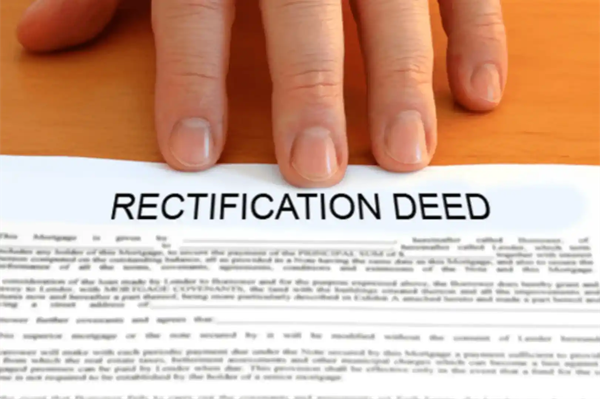
What Is a Rectification Deed in Property Matters?
Property transactions must be documented with accuracy because even a small mistake in a sale deed, title document, partition deed, gift deed, or agreement can cause serious problems later. Errors in names, measurements, boundaries, survey numbers, or property descriptions can affect ownership, registration, mutation, and even resale.
To correct such mistakes, the law provides a solution known as a Rectification Deed (also called a Correction Deed).
This blog explains what a rectification deed is, when it is required, and how it legally works.
🔹 1. Meaning of a Rectification Deed
A Rectification Deed is a legal document executed to correct mistakes or errors in a previously executed and registered property document.
These mistakes may include:
Typographical errors
Incorrect property measurements
Wrong boundary details
Spelling mistakes in the name of buyer/seller
Incorrect survey numbers or plot numbers
Errors in the description of property
Minor drafting mistakes
A rectification deed does not change the nature of the transaction.
It only corrects errors that occurred unintentionally while preparing the original document.
🔹 2. Legal Basis of Rectification Deed
A rectification deed is governed by:
Section 26 of the Specific Relief Act, 1963
Registration Act, 1908
Indian Stamp Act
These laws allow parties to correct accidental or clerical mistakes that do not alter the original terms of the contract.
🔹 3. When Is a Rectification Deed Needed?
A rectification deed is required when the original registered document contains an error such as:
✔ Wrong spelling of parties’ names
✔ Incorrect address
✔ Wrong Khasra/Khewat/Khatoni number
✔ Wrong measurement of land/plot size
✔ Boundary mismatch (North/South/East/West)
✔ Wrong mention of consideration amount (if error is clerical)
✔ Missing details due to oversight
If the mistake is simple and unintentional, a rectification deed is the easiest and safest way to fix it.
🔹 4. Who Has to Sign the Rectification Deed?
A rectification deed must be:
Signed by both parties of the original deed
Executed voluntarily
Registered with the Sub-Registrar
Witnessed by two persons
If one party refuses, the other may approach the civil court seeking rectification under the Specific Relief Act.
🔹 5. Stamp Duty for Rectification Deed
Stamp duty depends on the nature of correction:
✔ For minor corrections (name, spelling, description):
Stamp duty is minimal (often ₹100 or as per state law).
✔ For corrections affecting value of property:
If the correction increases the property value, additional stamp duty may apply.
🔹 6. Registration of Rectification Deed
A rectification deed must be registered with the local Sub-Registrar office, because:
The original deed was registered
Any change in a registered deed must also be registered
It ensures the corrected document becomes part of public records
Once registered, it legally becomes an extension to the earlier document.
🔹 7. Limits of a Rectification Deed
A rectification deed cannot be used to:
Change ownership
Change property share
Modify consideration amount intentionally
Alter sale terms
Introduce new conditions
Transfer rights not mentioned earlier
In other words, rectification can fix errors, but cannot rewrite the contract.
If parties want to change material terms, they must execute:
A supplementary deed, or
A new sale deed, depending on the situation.
🔹 8. What If Parties Do Not Agree to Rectification?
If one party refuses to sign the rectification deed, the other party has the right to:
File a suit for rectification in the civil court
Court may order correction if the mistake is proven
Court’s decree is then registered
This ensures that innocent parties are not harmed by clerical mistakes.
⭐ Conclusion
A rectification deed is a legally recognised method to correct errors in property documents without altering the substance of the transaction. It ensures that minor mistakes do not lead to major legal complications in the future.
By registering a rectification deed, the corrected information becomes part of the official record, protecting the interests of both buyers and sellers.